Showing posts with label baking. Show all posts

Wednesday, 1 October 2014

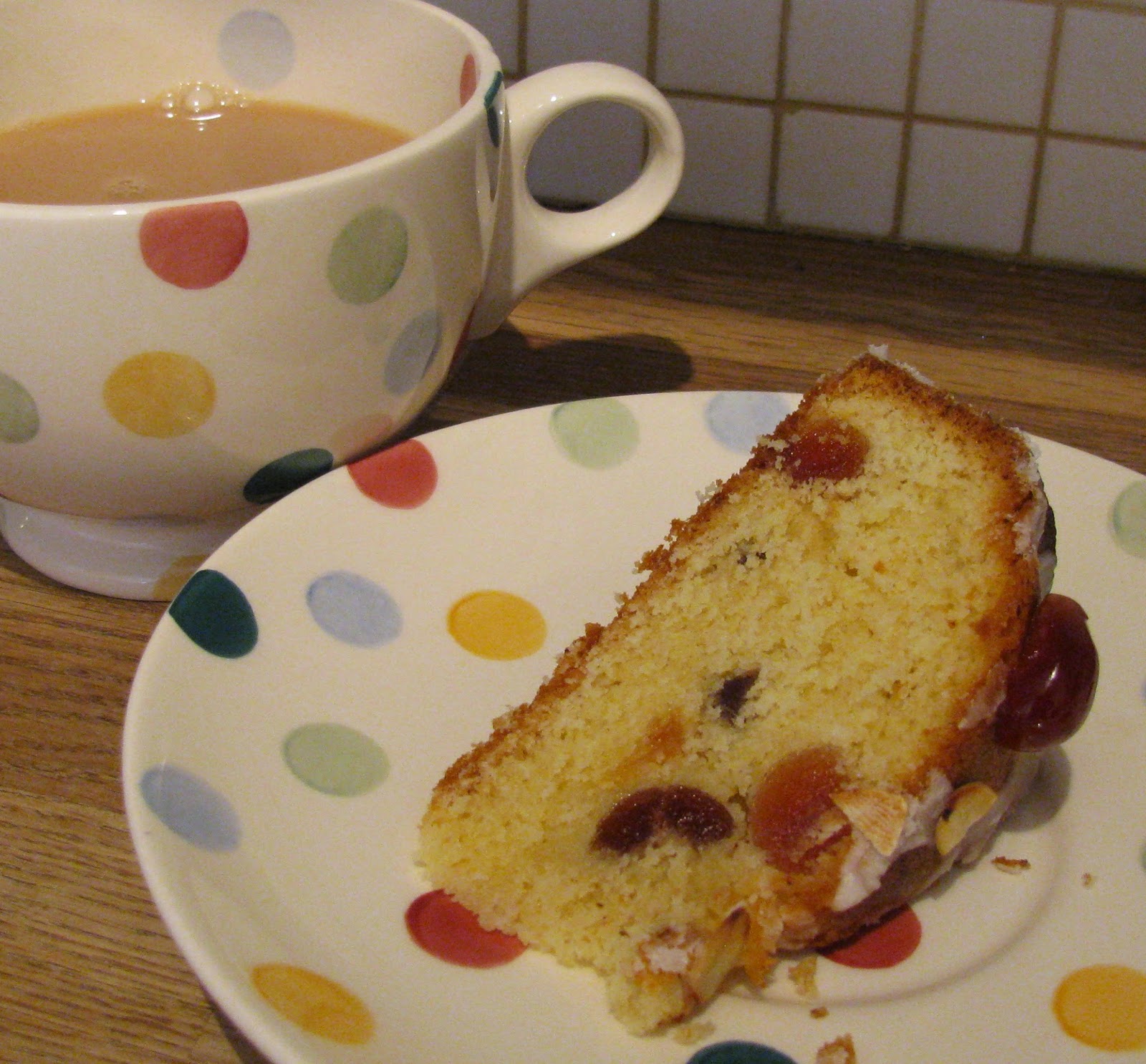
Blackberry tea loaf

tea loaf

I've been a bit slow in posting this, but back at the beginning of September I made this delicious tea loaf as a way of baking with blackberries while they were still in season.  The recipe comes from the National Trust "Teatime Baking Book" by Jane Pettigrew and along with the blackberries, lemon and black treacle help to give this loaf a lovely deep flavour.  A yummy teatime treat I will definitely be making again next year.

Incidentally, the National Trust has a variety of recipes available on its website.  Among the recipes ideas for puddings and cakes is one for a blackberry and apple upside-down cake.  The blackberries may be over, but I have just come back from Herefordshire with a bag of hand-picked Bramleys (courtesy of the P's) and an apple upside-down cake sounds a very appealing idea...

Tuesday, 2 September 2014

Learning to make bread - month eight/GBBO Challenge Week 3: ciabatta


Before #bingate, Bake Off did bread; rather fortunate for me as August was running out and I needed to make some bread for my New Year's resolution challenge.  So this wasn't any bake - this was a two challenge bake!

As Paul Hollywood advised the Bake Off contestants, ciabatta is a bread which requires patience.  To patience add planning; Hollywood's recipe calls for half the dough, water and yeast to be left to ferment for at least six hours (I left mine overnight), which apparently adds to the flavour.

As with baguettes, the dough for ciabatta is very sticky - a bit like working with chewing gum - and I find my machine (a Magimix 3200 compact) can't cope with it, which means I had to roll my sleeves up and (quite literally) get stuck in. 

With the luxury of time (unlike in the Bake Off tent), making bread can be a relaxing process.  It was certainly worth the wait; these ciabatta went down very well with my friends.

Saturday, 23 August 2014

GBBO Challenge Week 2: florentines

florentinesI must confess that I have always thought of florentines as chocolate with topping rather than a biscuit with chocolate...more fool me.  Second week of the Great British Bake Off was all about biscuits, and the bakers faced florentines for their technical challenge.

Second confession - I didn't use Mary Berry's recipe!  I was given the Green & Black's Chocolate Recipes book for my birthday and this seemed like the perfect opportunity to use it.  Unlike Mary's recipe, this one uses double cream - an extra touch of decadence that seems rather appropriate for a biscuit that is at the fancier end of the biscuit scale!

Fresh from the oven
The recipe itself is easy enough to follow.  These biscuits are full of flavour, and you can easily adapt to suit your taste.  Almonds feature heavily, with cherries also in there.  Orange peel is usually added - not being able to find this in my local supermarket I substituted mixed fruit and peel.  (The result, when combined with the milk chocolate topping I opted for, was a bit like eating Cadbury's dairy fruit and nut in biscuit form!)

The Green & Black's recipe didn't specify which type of sugar to use.  Mary Berry uses demerera sugar; not having this I went with light brown sugar which I thought would complement the flavour of the almonds and fruit.

Green & Black's suggest using a fork dipped in cold water to flatten the spoonfuls of biscuit mix before putting in the oven, and this certainly did seem to help.  The tricky bit is cooking them for just long enough - and no longer!

florentines
I erred on the thicker side with the biscuits - but at least that meant that I didn't get any chocolate bleeding through and it made for a good biscuit.

florentinesDark chocolate is what you would expect, but I went with milk chocolate (having been given some when I was given the book it seems appropriate to use it for the first recipe I tried).  Of course, milk chocolate takes longer to set than dark (I was impatient and used the fridge to speed things up!).

For my first attempt, I am really pleased with these.  They aren't as delicate as the florentines that you might find in Betty's, but they were rather tasty - lovely with a cup of tea - and they certainly seemed to go quickly, so I must have done something right!

Tuesday, 12 August 2014

GBBO Challenge Week 1: cherry cake


It's back!  Did you watch?  Last Wednesday the Great British Bake Off was back on our screens.  Thankfully the jump to BBC1 seems to be the only thing that has changed; it is the same gentle show it ever was, inviting you to put aside your worries for an hour and indulge.  For a competition, its surprisingly soothing, even as I wait to see how the bakers' showstoppers will turn out.

Never mind the trolls (it's a baking show for goodness sake - more cake less hate people!), I love all the bakers; they are there doing what they love and, with the technical challenge, they're always prepared to have a go.

This year I'm going to try doing the technical challenge from each show (although I reserve the right to pick something else if the technical challenge looks particularly impossible!).  Unlike the bakers, I won't be baking against the clock or having to worry about what Paul and Mary might say.  I fully expect to make mistakes - but hopefully in doing so I'll learn something as well.  And it should be fun...

Cherry cake
The first week's challenge was a cherry cake.  I used a Linda Collister recipe from The Great British Book of Baking.

My understanding from the show was that there were two things which could have a major impact on how good my finished cake was: how I prepared the cherries and the consistency of the cake mix.

Following the recipe, I rinsed the cherries under warm water (to remove their sticky coating), dried them in kitchen paper and mixed them with a little flour, before adding to the (well beaten) mix.

The cake was supposed to be in the oven for one hour, but when I checked it after 40 minutes it was done!

The recipe I was using was for an unadorned cake, but in the spirit of GBBO I decided to decorate mine as they had in the show - with lemon drizzle icing, toasted almonds and cherries.  This was also a good excuse to use a piping bag for the first time.

cherry cakeThe icing, while delicious, could have been thicker and my piping skills leave something to be desired, but it was my first time so I'm not going to judge myself on that!

I will allow myself one moment of smugness though - the cherries didn't sink to the bottom!  And, perhaps most importantly, the finished cake is rather yummy (even if I do say so myself!).  This is one I will be making again.

cherry cake
Perhaps not something I would want to present to Mary Berry
but I'm proud of it all the same


cherry cake
Success - the cherries didn't sink!

Thursday, 31 July 2014

Learning to make bread - month seven: teacakes


bakingA good toasted teacake, with a cup of tea, is one of life's simple pleasures.  Like many good things in life though, making teacakes requires patience.

If, like me, you find it difficult to pause, always seem to be trying to do several things at once and are constantly thinking about what you should be doing, baking can be a break from this.  It's an opportunity to focus on one task, on what you are doing in that moment. 


Kneaded, risen and
ready to shape
One of the things I have enjoyed in my "learning to make bread" challenge is finding how relaxing the process of kneading dough can be.  It is one of those repetitive tasks that allows you to focus on the moment; kneading can't be rushed, it will take as long as it takes.  I can stop rushing about and just focus on the task in hand; the feel of the dough and how its texture changes in my hands as I work it.

An hour and a half for the dough to rise, another forty-five minutes for second proving; was it worth the wait?  For a homemade toasted teacake, absolutely.

I used a recipe from Linda Collister's Bread book, which I have mentioned before.  The finished teacakes were rather good (even if I do say so myself!).  Definitely one to make again. 

There's a wealth of information on the internet about mindfulness and the benefits that focusing on the present moment can bring for mental wellbeing.  This NHS guide is a good place to start. 


Shaped and left for second proving, now ready for the oven...
bread
The finished teacakes
bread
Toasted, with a side of blackberries from the garden.
Perfect tea-time treat.

Monday, 30 June 2014

Learning to make bread - month six: grissini

bread sticks

The humble bread stick.  My first effort at these probably wouldn't impress any serious baker, but for my first attempt I was rather pleased with them.

An ever-reliable party nibble, the bread stick originates from Turin, and (according to Wikipedia) was apparently first made as far back as the 14th century.


Kneaded and ready to rise...
The recipe I used came from Linda Collister's "The Bread Book" (a gem I found in a charity shop).  Linda Collister is responsible for many of the recipes that appear in the Great British Baking series.  However, I would suggest getting your hands on a copy of her bread book if you can; it's very comprehensive and very user-friendly, even for a bread-making novice like me.


An hour later...
Linda Collister recommends that a slightly under-sized
dough is preferable to an over-risen one for this recipe
I couldn't resist experimenting with flavour, and tried sea salt, rosemary and chilli, as well as some plain (and some inadvertent combinations of the three!).  I added the seasoning as I rolled the sticks into shape.  While this worked well with the sea salt and chilli, I think the rosemary bread sticks would have been more successful if I had added the rosemary at the kneading stage.  As it was, the salt bread sticks were definitely my favourite.
 
Rolling out ready for cutting
 
bread sticks
Shaped and ready for the oven
These bread sticks would not win a competition for uniformity, but I like that as the lack of uniformity reminds me that these are homemade and, I think, adds to their charm.  What I would do differently next time though is to make each stick a little thinner and to cook them for longer.  These sticks did not have the "snap" that one would expect; however, they were delicious, and a perfect accompaniment to a mezze lunch.

A word on the sponge method
Collister's basic technique for bread-making includes a stage where you leave the batter to "sponge".  With the grissini, this stage comes after you have added the salt and yeast (I used fast-action dried yeast) - always remembering to add them on separate sides of the bowl of course - and poured the water and oil into a well in the middle.  The idea is to then draw a little flour into the liquid and then leave it to "sponge" for about 20 minutes - basically to become aerated and frothy.

This is the so-called "half-sponge method".  This is not a technique that I have used with any of the previous breads I have made.  I can't say that I was able to notice any discernible difference; however, I think to really notice the difference in flavour you would have to leave the batter to "sponge" for at least a couple of hours.  Dan Lepard's recipe for "the easiest loaf in the world" uses the half-sponge method (warm water, yeast and flour left for a couple of hours, or even overnight if possible).

Tuesday, 13 May 2014

Learning to make bread - month five: mini baguettes

With a weekend in Paris to look forward to, I decided to get in the French spirit by making mini baguettes for May's bread baking challenge.


A French supper - wine and French onion soup
 to go with a freshly baked baguette
The recipe is one from Paul Hollywood's bread book.  The only ingredients I didn't have was semolina (used to dust the baguettes before they go in the oven), but that didn't seem to matter.

I have to admit I was sceptical about how well these would turn out; as it happens, I think they are a strong contender for my best bread so far...

The dough for baguettes is very wet and sticky!
The recipe advises kneading the dough in a processor as the dough is very wet and sticky to start with.  Although my machine (a Magimix Compact 3200) has a dough blade, it did struggle with this dough.  I was able to start kneading the dough in the machine, but the dough travelled up the inside of the blade and jammed the machine(!), so I finished kneading by hand - felt a bit like handling chewing gum to start with, but rather satisfying to see the dough transform in my hands into something that could be shaped into a smooth ball.

The risen dough
Having left the dough to rise, its then knocked back, shaped, and left for its second proving.  I then dusted it with flour and cut it as instructed by the recipe before placing in the oven (with fingers crossed).


bread
Shaped, left for second proving, dusted, cut and ready for the oven
I needn't have been sceptical - the end product was two beautiful, delicious mini baguettes which we had warm for supper with French onion soup. 

Bon appétit!

bread
The baked baguettes, still warm and ready to eat
bread
Bon

Monday, 28 April 2014

Learning to make bread - month four: maneesh

flatbreadI will be honest, I had not heard of Maneesh before I came across the recipe in Paul Hollywood's Bread book.  It is, apparently, a classic flatbread from the Middle East.

To be a true Maneesh the dough should really be covered with za'atar, a mix of herbs and sesame seeds.  Not having any sesame seeds in my store cupboards, I improvised and went for a mix of thyme and rosemary.

 My first response when I took the bread from the oven was that my effort at this flatbread recipe was probably my least successful bread-making attempt so far.  A bit like Goldilocks, I ended up with one bread burnt on the bottom, another stuck to the paper, and a third that looked like it was probably just right.

However, I needn't have been quite so pessimistic; none of the three would win any beauty competition, but they taste really very good.  This is probably partly down to the sugar in the recipe and partly down to the thyme and rosemary on top.  The texture is nice and soft.  In all, a bread that is very easy to pick at - and one which can disappear quickly!

flatbread
 
So not my most successful bread-making attempt, but something I would do again.  Only next time, I think I will add another ingredient to the recipe: patience.  I think my results would have been better had I cooked the three breads in the oven one at a time rather than together.

flatbreadflatbread

flatbread
 

Sunday, 27 April 2014

Chocolate orange cake

As I have mentioned before, I have a particular like for chocolate orange as a flavour.  So when planning cakes to make for a gathering of my friends for my birthday, a chocolate orange cake was a natural choice.

Not being able to find a recipe, I decided to adapt recipes I did have for chocolate sponge and for chocolate frosting.

The chocolate sponge is based on Nigel Slater's recipe for a chocolate coffee cake - instead of 3tbsp of espresso coffee I added 3tbsp freshly squeezed orange juice and some orange zest to the cake mix.  The recipe makes a cake with a lovely texture, and this amount of orange worked well to give the chocolate sponge a yummy flavour, without the orange taking over.

For Christmas Mum had given me some Orange Blossom water, and this seemed a perfect opportunity to try it out.  I used it to flavour the chocolate frosting; it took a bit of trial and error (lots of tasting required!) to get the balance right - a couple of tablespoons seemed to do the trick.

Then all that was needed was some orange zest to brighten up the top of the cake.

This is a grown-up chocolate cake, in that it is not a sweet chocolate cake.  I love chocolate orange as a flavour, and I was a bit worried that this cake (which I basically made up based on nothing more than the fact that I really like chocolate orange) wouldn't live up to my expectations; I needn't have worried.  It was delicious and went down very well with my friends.  Definitely one to make again.

chocolate cake

Sunday, 13 April 2014

Learning to make bread - month three: hot cross buns


Perhaps not technically a bread, but the recipe requires yeast, so I say it counts.  I love hot cross buns; delicious and versatile, they can quite legitimately be eaten for breakfast, elevenses, afternoon tea, or supper - take your pick.  Hot cross bun season signifies that spring is well and truly on its way, and my bread-making resolution seemed a perfect opportunity to learn how to make them.  Easter being late this year, I thought nevertheless that the beginning of April was a perfectly respectable time to start baking hot cross buns (and gave me time to practice before Easter!).

I used the recipe from the Great British Book of Baking;  there's a Paul Hollywood recipe on the BBC website, the basics of which are similar, and Felicity Cloake compares a number of different methods to come up with her take on how to cook the perfect hot cross bun.

There's a good history of hot cross buns here.  It doesn't mention anything about ancient Greece or Rome though; according to the British Book of Baking, the ancient Egyptians offered similar small round yeast cakes to the goddess of the moon, and the ancient Greeks and Romans made them for the goddess of light; it was the Saxons, apparently, who added the cross.  There's a detailed reading selection on the history of the hot cross bun here.

The recipe I followed used mixed dried fruit, with nutmeg and mixed spice for added flavour.  Making these buns was a process that required time, but was well worth the wait; the buns are delicious.  I've already made a second batch and will be making more over Easter weekend; in fact, they are so good I may even have to extend hot cross bun season beyond Easter!


Ingredients mixed and ready for kneading
Kneaded and ready to rise


The risen dough is knocked back then divided into twelve buns
I left the dough for about one and a half hours to rise.  You then knock the air out of it, and divide into twelve buns, which you place on the prepared tray.  A large plastic bag is then placed over the tray and it is left for about 45 minutes, until the buns have about doubled in size.  However, the British Book of Baking explained that as an alternative you could put the tray (in its bag) in the fridge overnight.  I went for the latter, which then meant I had buns ready to go in the oven first thing in the morning.  All I had to do was add the cross.  This is made from flour and water, which forms a paste.  Rather than using a piping bag, I rolled small bits of the paste between my hands to make the lines which I then laid over the buns.

Glaze as soon as they are out of the oven
Still warm from the oven...what a treat.


Monday, 24 March 2014

Thaxted Sticky Tea Loaf

Three words to describe this tea loaf: sticky, fruity, delicious.  Spread some butter on it, pour a cup of tea and its the perfect accompaniment for your three o'clock tea break.

tea loaf
A slice of tea loaf - tea time sorted!
The recipe comes from a book given to my brother and me (my brother being my current lodger!) by some good family friends of ours who live in the beautiful Essex town of Thaxted.  The recipe book is called (pun alert!) "On a Chicken Wing and a Prayer", being a cookery book sold to raise funds for the ongoing restoration of Thaxted Parish Church.  All the recipes have been donated by people from the town; I am very grateful to whoever donated the recipe for this tea loaf!

On a Chicken Wing and a Prayer
"On a Chicken Wing and a Prayer" - Recipes from Thaxted Parish Church

The recipe is wonderfully simple.  To be honest I made it on a slight whim, having an urge to bake something and realising that all the ingredients were items I had - tea, mixed fruit, brown sugar, self-raising flour, an egg and cinnamon.

The fruit and sugar are soaked in tea overnight.  I think next time I make this I will be a bit braver and make the tea stronger.  I'm having friends over at the weekend, which I think will be the perfect excuse to make this delicious loaf for a second time.  I may even let them eat it before three o'clock tea time!

tea loaf
The finished loaf - already half gone!

Monday, 3 March 2014

Learning to make bread - month two: soda bread

My New Year's Resolution was to learn to make bread, and in particular to attempt to make a different type of bread each month.  For January I made a basic bloomer; for February it was soda bread.

I have to admit that I do not recall having heard of soda bread before, but Paul Hollywood promised me that it's a great starting point for those of us who are new to bread making.  It doesn't contain yeast, so unlike the bloomer doesn't require kneading or rising time.  It's basically four simple steps: mix, shape, rest, bake.  The theory (or so the book tells me!) is that the bicarbonate of soda (alkali) and the buttermilk (acid) react together to create the carbon dioxide that makes the bread rise. Whatever the theory, it tasted good, which is the main criteria for me.  Paul Hollywood's Bread book has a range of recipes for soda breads and bakes - including crumpets, which I may have to come back to later in the year.  For now, I am very pleased with my attempt at soda bread; it's quick, easy and tasty, so I'm sure this will be one I make again.


bread
The loaf is cut to allow the heat to get into the centre


bread
Fresh from the oven and ready to eat